Cardiovascular and metabolic diseases are driven by interconnected factors such as lipid imbalance, vascular inflammation, myocardial dysfunction, fibrosis, and inherited genetic abnormalities. Conventional medicines can manage many of these pathways, but some disease-driving proteins remain difficult to inhibit with small molecules or antibodies.
RNA interference introduces another therapeutic strategy: reducing the production of a selected protein by degrading its messenger RNA before translation occurs. This mechanism can broaden cardiovascular pharmacotherapy by creating opportunities to address genetically validated targets that are difficult to reach through traditional drug modalities.
Many established cardiovascular drugs work by binding to enzymes, receptors, ion channels, or circulating proteins. Their effectiveness depends on whether the target has a suitable binding site and whether adequate drug concentrations can be maintained.
Small interfering RNA acts earlier in the biological process. After entering the cytoplasm, the siRNA guide strand is incorporated into the RNA-induced silencing complex. It directs the complex toward a complementary messenger RNA, leading to degradation of that transcript and reduced production of the encoded protein.
| Therapeutic Approach | Primary Level of Action | Main Development Consideration |
|---|---|---|
| Small molecule | Enzyme, receptor or ion channel | Target must have an accessible binding site |
| Antibody | Extracellular or cell-surface protein | Target must be accessible outside the cell |
| siRNA | Messenger RNA in the cytoplasm | Active siRNA must reach the correct cells |
| Gene replacement | DNA or functional gene expression | Requires durable and controlled gene delivery |
RNAi does not automatically replace existing medicines. It expands the range of possible targets and may be combined with established treatments when the mechanisms are complementary.
The liver has been the most accessible organ for many oligonucleotide therapies because circulating delivery systems can naturally accumulate there. This has enabled RNAi programs against liver-produced proteins involved in cardiovascular risk.
Inclisiran is an approved siRNA directed against PCSK9 messenger RNA. The FDA approved it as an addition to diet and maximally tolerated statin therapy for certain adults requiring further LDL cholesterol reduction. Its approval demonstrates that gene silencing can be integrated into existing cardiovascular treatment rather than used only as a standalone intervention.
Other investigational siRNA programs have targeted lipoprotein(a), a genetically influenced cardiovascular risk factor produced primarily in the liver. In a phase 2 trial, olpasiran substantially reduced lipoprotein(a) concentrations in participants with established atherosclerotic cardiovascular disease, although further trials are required to determine whether this biomarker reduction translates into fewer cardiovascular events.
These examples illustrate an important distinction: reducing a validated biomarker is an essential pharmacological result, but clinical development must also establish meaningful patient outcomes and an acceptable safety profile.
Many cardiovascular targets are not located in the liver. Disease-driving genes may be expressed in cardiomyocytes, vascular cells, skeletal muscle, adipose tissue, kidney tissue, or immune-cell populations.
Developing broader cardiovascular disease solutions therefore requires delivery systems capable of reaching extrahepatic tissues. An siRNA may show strong activity in cultured cells but still fail in vivo if it is rapidly cleared, accumulates in the wrong organ, or remains trapped inside intracellular vesicles.
A successful delivery system must complete several steps:
Protect the siRNA from degradation in biological fluids.
Maintain an appropriate circulation and distribution profile.
Reach the intended organ.
bind to or enter the relevant cell population.
Escape from endosomal compartments.
Release active siRNA into the cytoplasm.
Achieve sufficient and durable target suppression.
Total tissue concentration alone is not enough. Productive delivery must be confirmed through messenger RNA reduction, protein suppression, downstream pharmacodynamic changes, and disease-relevant functional effects.
Cardiomyopathies and heart failure can involve pathogenic genetic variants and abnormal signaling pathways within cardiac muscle. Directly reducing the expression of a disease-driving gene in cardiomyocytes could create a different intervention point from therapies that primarily control blood pressure, heart rate, fluid balance, or systemic metabolism.
However, cardiac delivery presents significant challenges. The therapeutic must cross biological barriers, enter cardiomyocytes efficiently, avoid excessive exposure in non-target tissues, and maintain activity without causing unacceptable immune or organ toxicity.
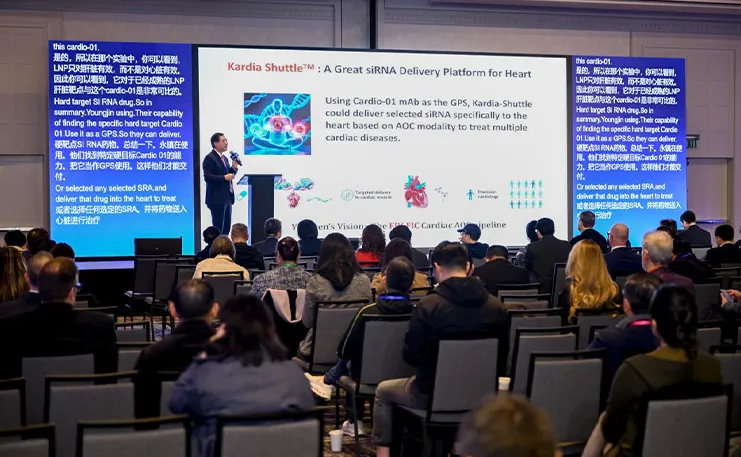
Youngen is developing the KARDIA SHUTTLE™ platform to support targeted delivery of RNA therapeutics to cardiac tissue. Its cardiovascular research focuses on cardiomyopathies and heart-failure biology, including hypertrophic cardiomyopathy, dilated cardiomyopathy, and heart failure with preserved or reduced ejection fraction.
These programs remain part of drug research and development. Candidate-specific efficacy, safety, dosing, and clinical benefit must be established through appropriate preclinical studies and controlled clinical trials.
A technically effective siRNA may still have limited therapeutic value when the selected gene is not a major driver of disease.
Target evaluation should consider:
Human genetic evidence
Expression in the relevant tissue and cell type
Relationship between target level and disease severity
Expected effect of partial versus near-complete suppression
Biological redundancy and compensatory pathways
Potential consequences in healthy tissues
Availability of measurable pharmacodynamic biomarkers
Targets supported by human genetics may provide greater confidence that altering the pathway will influence disease biology. Nevertheless, the direction of intervention matters. A protective loss-of-function variant may support gene suppression, while a gene required for normal cardiac or metabolic function may create safety concerns.
After selecting a target, multiple siRNA sequences should be screened for potency, selectivity, and duration. Candidate design must reduce unintended complementarity with other transcripts and minimize sequence-dependent activation of innate immune pathways.
Chemical modification can improve nuclease resistance, pharmacokinetics, and tolerability. However, excessive or poorly positioned modification may reduce loading into the silencing complex or weaken target cleavage.
Development should therefore evaluate:
Messenger RNA and protein reduction
Dose-response behavior
Duration of silencing
Transcriptome-wide off-target effects
Cytokine and immune activation
Metabolite profiles
Tissue distribution
Recovery after treatment withdrawal
Youngen’s FISTsiran platform is designed to screen RNA molecules for activity, durability, and safety. Its MSTsiran approach explores the incorporation of multiple siRNAs into a single therapeutic entity, while STTsiran focuses on enhancing siRNA activity in extrahepatic tissues.
Pharmacotherapy for cardiovascular disorders rarely depends on one mechanism. Patients may require lipid management, blood-pressure control, antithrombotic therapy, glucose regulation, heart-failure treatment, or interventions addressing a specific genetic disease.
RNAi may contribute through several roles:
Suppressing a liver-derived cardiovascular risk factor
Reducing a pathogenic cardiac gene
Modulating a metabolic pathway
Complementing an existing standard-of-care medicine
Providing longer-lasting target suppression between doses
Addressing targets that are not readily druggable with conventional modalities
The final development strategy must define which patient population is most likely to benefit, how target engagement will be measured, whether background medication should continue, and which clinical outcomes can demonstrate therapeutic value.
RNAi expands cardiovascular drug development by acting at the messenger RNA level and reducing the production of selected disease-related proteins. Liver-directed programs have already established clinical feasibility, while cardiac and other extrahepatic applications depend on advances in tissue targeting, cellular uptake, endosomal escape, sequence design, and safety evaluation.
At Youngen, we are building RNA discovery and delivery platforms to explore new cardiovascular disease solutions for metabolic disorders, cardiomyopathies, and heart failure. By combining target validation, siRNA screening, chemical modification, conjugation, and tissue-specific delivery, our research aims to broaden the future possibilities of cardiovascular pharmacotherapy while maintaining rigorous preclinical and clinical development standards.